



Did you know that over 90% of online experiences begin with a search engine? This staggering statistic highlights the importance of a solid online presence. In today’s digital landscape, having a well-crafted approach to enhance your visibility is crucial.
As Danny Sullivan pointed out, good SEO is good GEO for modern search engines. This means that developing a comprehensive plan is essential for any business aiming to improve its digital footprint. By focusing on actionable steps, you can build a robust framework that aligns with the latest search engine algorithms and user behaviors.
In this guide, we will explore how to integrate technical, on-page, and off-page elements effectively. This approach ensures that your efforts are not just isolated tasks but part of a unified plan. By understanding the intersection of traditional search and generative AI, you can maintain visibility in an increasingly complex digital ecosystem.
Key Takeaways
- Improving digital visibility is essential for long-term growth.
- A cohesive plan helps brands remain competitive.
- Integrating various elements maximizes online presence.
- Understanding AI’s role is crucial for maintaining visibility.
- Your efforts should be part of a unified plan to capture traffic.
Introduction: The Power of a Solid SEO Strategy
Research shows that search engines kick off over 90% of online activities. This statistic underscores the need for businesses to enhance their visibility. A well-structured approach can lead to significant growth and improved online presence.
The success of Morningside Acupuncture NYC illustrates this point. By investing in a solid seo strategy, they quadrupled their revenue within two years. Their website generated organic search traffic valued at $9.2K in July 2025. This demonstrates the tangible impact of focusing on visibility.
Here are some key insights:
- High visibility in search engines attracts qualified traffic that converts into revenue.
- A consistent approach aligns teams and optimizes resource use.
- Search engines favor websites that show authority and relevance.
- Focusing on visibility ensures your brand appears when potential customers search for solutions.
- Consistent growth builds trust with users and search algorithms.
| Year | Revenue Growth | Traffic Value |
|---|---|---|
| 2020 | Quadrupled | $9.2K |
| 2021 | Increased | $7.5K |
| 2022 | Stable | $8.0K |
For more insights on boosting your online presence, check out this comprehensive guide and learn how to get free backlinks to enhance your efforts.
Understanding the Core Components of SEO
Most online journeys begin with a query in a search engine. Understanding the essential components of search engine optimization is vital for any business looking to thrive online. This knowledge can significantly enhance your visibility and engagement.
On-page elements are crucial for improving the quality and relevance of specific pages. This ensures they meet the needs of both users and search engines. Key aspects include:
- On-page SEO: Focuses on enhancing page content and structure.
- Off-page SEO: Involves building brand mentions and links from other sites.
- Technical SEO: Ensures your website performs optimally for users and crawlers.
Each of these components works together to create a comprehensive optimization plan. By mastering these pillars, you enhance user experience and signal your site’s value to major search engines. A balanced approach ensures your content is discoverable, technically sound, and supported by strong external authority signals.
For more insights on effective optimization, visit the SEO starter guide.

Implementing an Effective SEO strategy Framework
To thrive in today’s digital landscape, a systematic approach is crucial for your business. Implementing an effective seo strategy requires a framework that connects research, execution, and measurement. This connection leads to tangible outcomes for your organization.
Without a clear plan, teams often perform disconnected tasks. This can hinder lead generation and revenue growth. A structured framework helps prioritize high-impact activities that align with your marketing goals.
By treating search as a strategic growth channel, you can defend your market share. This approach allows you to scale your efforts efficiently in a competitive landscape. Every piece of content you publish should serve a specific purpose in capturing search demand.
Consistent execution within this framework enables you to adapt to algorithm updates and shifts in user behavior. This agility gives you confidence in your ongoing efforts.

| Framework Component | Description | Impact |
|---|---|---|
| Research | Understanding your audience and market trends. | Informs targeted content creation. |
| Execution | Implementing content and technical optimizations. | Enhances visibility and user experience. |
| Measurement | Tracking performance metrics and outcomes. | Guides future strategy adjustments. |
For more insights on enhancing your online presence, check out this trusted company that helps businesses succeed.
Setting Clear Goals and KPIs for Business Growth
Setting clear goals is essential for driving effective growth in any business. Establishing these objectives allows your team to focus on what truly matters. When you create SMART goals, you ensure that your efforts contribute to measurable business growth and revenue generation.
Specific, Measurable, Attainable, Relevant, and Time-bound goals provide a clear benchmark for tracking performance. This clarity is vital for reporting success to your internal stakeholders. Aligning your objectives with business outcomes ensures that your team focuses on high-value activities rather than just chasing vanity metrics like traffic volume.
For example, a goal to increase organic-driven demo requests by 25% within six months creates a clear focus for your content and technical efforts. Tracking the right metrics allows you to prove the ROI of your efforts and secure the budget needed for future expansion and optimization.
By connecting every action to a business outcome, you transform your search efforts from a cost center into a powerful engine for growth.

| Goal Type | Description | Impact |
|---|---|---|
| Specific | Clearly defined objectives. | Provides focus and direction. |
| Measurable | Quantifiable outcomes. | Tracks progress effectively. |
| Time-bound | Set deadlines for achievement. | Creates urgency and accountability. |
Competitor Analysis: Learning from the Leaders
In the fast-paced world of digital marketing, understanding your competitors is crucial. Ongoing competitor analysis is essential because search rankings are relative. Your competitors are always working to enhance their content and authority.
Monitoring who ranks for your priority queries helps identify keyword gaps. These gaps represent areas where demand exists, but your site currently lacks sufficient coverage. By analyzing the backlink profiles and content structures of industry leaders, you can uncover new opportunities to outperform them in search results.
It’s important to draw inspiration from competitors while ensuring your approach aligns with your unique brand values. Identifying weaknesses in a competitor’s approach, such as thin content or poor user experience, allows you to create a genuine advantage for your site.
Regular audits of competitor performance help defend your existing positions. This proactive approach allows you to capture new market share as search trends evolve over time.

| Analysis Focus | Description | Potential Benefits |
|---|---|---|
| Keyword Gaps | Identify keywords competitors rank for that you do not. | Expand content coverage and capture more traffic. |
| Backlink Profiles | Analyze where competitors get their backlinks. | Discover new link-building opportunities. |
| Content Structure | Examine the format and quality of top-ranking content. | Improve your content strategy for better engagement. |
Keyword and Prompt Research: Laying the Foundation
In the digital age, most users turn to search engines to find what they need. This makes keyword research a crucial first step. It helps identify the queries your target audience uses during their buying journey. Tools like Semrush’s Keyword Magic Tool provide access to a database of over 27.2 billion keywords, ensuring you discover valuable terms that might otherwise be overlooked.
Understanding user search intent is essential. Whether it’s informational, navigational, commercial, or transactional, knowing this intent helps create content that search engines understand and prioritize. Evaluating search volume and keyword difficulty allows you to focus on terms with the best potential for reach and ranking.
Prompts, which are longer, more natural-language questions, require a different approach than traditional keyword research. By building your strategy around real customer problems, you ensure your content delivers the exact information users search for in their daily lives.

| Research Focus | Description | Benefits |
|---|---|---|
| Keyword Research | Identifying relevant queries | Improves content targeting |
| User Intent | Understanding search motivations | Enhances content relevance |
| Search Volume | Evaluating keyword popularity | Guides prioritization |
Developing a Structured Content Plan
Crafting a well-organized content plan is essential for establishing authority online. This plan translates your research into a series of pillar pages and supporting clusters that build topical authority for your website.
Pillar pages serve as the foundation for core topics. Meanwhile, cluster content expands on long-tail queries to capture a wider range of search traffic. Internal linking between these related pages helps search engines understand the depth of your expertise and the relationship between your various content assets.
Creating content that satisfies search intent clearly and comprehensively is the most effective way to rank higher in modern search engine results. By organizing your content calendar around these clusters, you ensure that your team is publishing with purpose rather than just creating random blog posts.
This approach helps you build a connected library of content that guides users through the funnel and demonstrates your brand’s authority to Google.

Enhancing On-Page SEO for Maximum Visibility
Effective on-page optimization is essential for improving your site’s visibility in search results. This involves several key practices that can elevate your content’s performance.
First, focus on optimizing your metadata. This includes title tags and meta descriptions, which play a crucial role in attracting clicks. Clear and concise headers (H1-H3) also help search engines understand your content’s structure and intent.
Incorporating primary and secondary keywords naturally into your text is vital. This ensures your content performs well without sounding forced. Each page should offer something unique, such as original studies or engaging visuals, to stand out from the competition.
Accessibility and SEO principles often overlap. By optimizing your layout for readability, you enhance your site’s performance for all visitors. Regularly auditing your existing pages for accuracy and depth is also essential to maintain visibility in an ever-changing search landscape.

For more insights on enhancing your online presence, check out this resource to learn how to get free backlinks and improve your efforts.
Optimizing Technical SEO: Crawlability and Speed
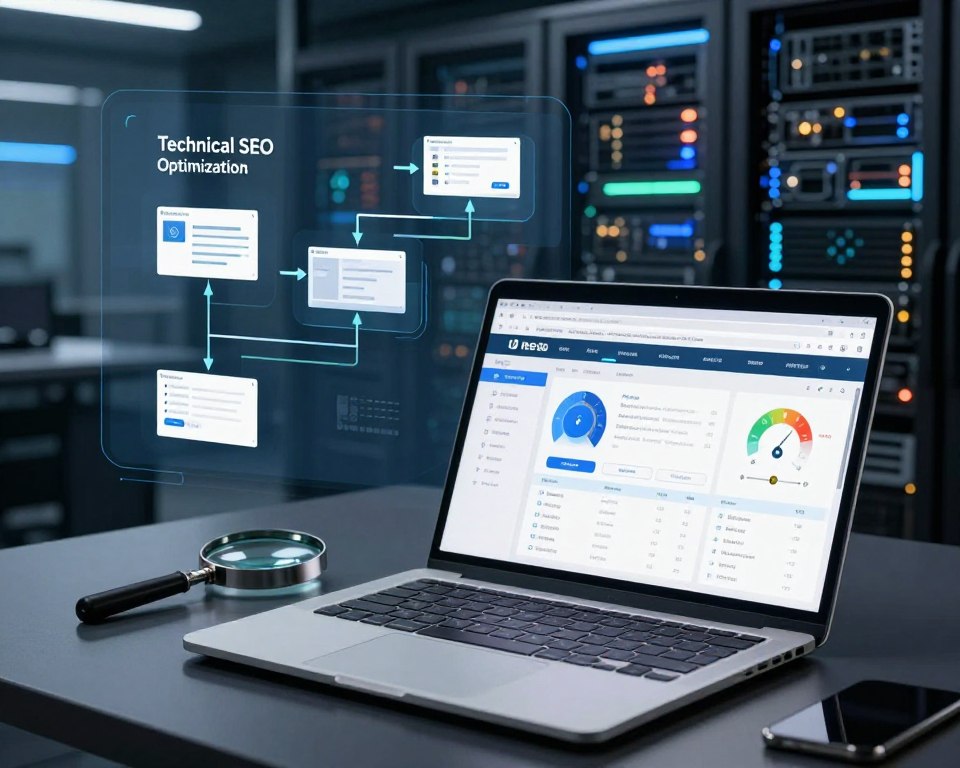
The foundation of a successful online presence lies in optimizing technical elements. This ensures that search engines can efficiently crawl, render, and index your website’s content for the best results. A well-optimized site enhances user experience and boosts your visibility in search results.
Improving your site performance, including Core Web Vitals, is essential for providing a fast, responsive experience that search engines reward with higher rankings. Core Web Vitals are three page experience metrics that Google uses to evaluate site performance.
Fixing broken internal links and redirect chains prevents unnecessary work for crawlers. This ensures that users can navigate your site without frustration. Using tools like Google Search Console allows you to monitor page indexing and identify technical issues that might be blocking your site’s visibility.
Additionally, eliminating duplicate content is crucial for maintaining a healthy and authoritative domain. Duplicate content is defined as pages with at least 85% identical content, which can harm search visibility. A well-optimized technical foundation allows your content and authority-building efforts to scale effectively across thousands of pages on your website.
| Technical Aspect | Description | Impact |
|---|---|---|
| Crawlability | Ensures search engines can access and index your content. | Improves visibility in search results. |
| Site Performance | Enhances loading speed and responsiveness. | Boosts user experience and search rankings. |
| Duplicate Content | Identifies and removes pages with similar content. | Maintains domain authority and search visibility. |
Building Quality Backlinks and Digital Mentions
Building a strong network of backlinks can significantly boost your site’s credibility. Quality backlinks from high-authority websites act as a vote of confidence for search engines. This enhances your visibility and establishes trust with users.
Digital PR campaigns and guest posting are effective tactics for generating the coverage and links needed to enhance your brand’s search visibility. These methods help create meaningful connections with reputable sites.
Even unlinked brand mentions can reinforce your entity authority. This is increasingly important for visibility in AI-driven search experiences today. Your link-building prospects should focus on reputable sites that publish high-quality content.
By becoming a source for media requests, you can earn valuable mentions and links. This establishes your brand as an authority in your niche. A proactive approach to earning links and mentions will differentiate your content from competitors and help defend your rankings over the long term.

Optimizing for AI, LLMs, and Future Search Trends
The future of search is being redefined by advancements in artificial intelligence. This shift presents new opportunities for businesses to enhance their online presence. As AI technology evolves, so too must our approach to content creation and optimization.
Optimizing for large language models (LLMs) is essential because AI search visitors are 4.4 times more valuable than traditional search visitors. Projections suggest that AI search traffic could exceed traditional search traffic by 2028, making this a critical area for future-proofing your efforts.
To succeed in AI search, your content must provide clear answers, strong structure, and trusted sourcing that AI tools can easily cite. Building a unique value proposition and communicating it consistently helps your brand stand out in AI-generated responses across platforms like ChatGPT.
Additionally, managing your online reputation and encouraging customer reviews are key tactics for ensuring your brand is featured positively in AI-driven summaries. By acting now, you can build a strong foundation for an AI-dominant future while simultaneously improving your performance in traditional search engines.

| Focus Area | Description | Impact |
|---|---|---|
| AI Optimization | Adapting content for AI-generated responses. | Increases visibility and engagement. |
| Value of AI Traffic | AI search visitors are more valuable. | Boosts potential revenue. |
| Reputation Management | Encouraging positive reviews. | Enhances brand perception. |
Leveraging Mobile SEO for an Inclusive User Experience
Mobile devices have become the primary way users access the internet, making mobile optimization vital. In fact, 53% of SEOs and marketers rank mobile devices as the most used platform for their website visitors today. This shift highlights the importance of ensuring your site is fully optimized for mobile users.
Google practices mobile-first indexing, meaning it primarily uses the mobile version of your site when ranking pages in search results. Therefore, it’s essential to ensure your site is responsive and loads quickly on mobile devices. This will help maintain a positive user experience and high engagement rates.
Testing your site speed on 3G and 4G networks is crucial. This helps ensure that your performance does not decline for users with limited bandwidth or connectivity. An inclusive mobile strategy guarantees that all visitors receive the same value and functionality, regardless of the device they use to access your content.
By prioritizing mobile usability, you capture a larger market share and align your technical efforts with the preferences of the modern digital consumer.

Utilizing SEO Tools for Insight and Improvement
In the realm of digital marketing, having the right tools at your disposal can significantly impact your performance. Utilizing effective tools is essential for tracking your keyword rankings, traffic, and overall performance data across your entire website.
Google Search Console provides direct insight into how your pages perform in organic search. It allows you to track up to 1,000 top queries for your site, giving you a clear view of your search visibility.
Platforms like Semrush and Ahrefs offer deep keyword analysis and competitor benchmarking. These tools help you make data-driven decisions for your approach. Analyzing performance data allows you to identify what is working and what isn’t, refining your efforts over time for better results.
Customizable dashboards, such as those created in Databox, help visualize your progress. You can share key metrics with stakeholders across your organization. By monitoring your rankings and traffic consistently, you can quickly identify gaps and focus on the content that drives the most value.
| Tool | Description | Key Benefits |
|---|---|---|
| Google Search Console | Tracks organic rankings and queries. | Provides insights into search performance. |
| Semrush | Offers keyword analysis and competitor data. | Facilitates data-driven decisions. |
| Ahrefs | Analyzes backlinks and site performance. | Enhances content and link-building strategies. |
Integrating SEO into Your Overall Content Strategy
A well-integrated approach to content and optimization can enhance your brand’s visibility. Integrating these elements begins in the planning stage, long before a single word is written by your creative team. By aligning your content stakeholders on the purpose of each piece, you ensure that every article supports broader business goals and search objectives.
When creators understand the “why” behind the keywords, they make smarter choices. This leads to engaging content that maintains voice and clarity. Utilizing structured content workflows helps scale production while ensuring quality and relevance. This is essential for ranking well in modern search engines.
Moreover, promoting your content across owned and earned channels gives evergreen pieces the initial boost they need to earn backlinks over time. A unified approach ensures that your SEO and content teams collaborate effectively, building a library of assets that compounds in value over time.
| Integration Focus | Description | Benefits |
|---|---|---|
| Planning | Align content goals with SEO objectives. | Supports business growth. |
| Collaboration | Involve all stakeholders in the process. | Enhances content relevance. |
| Promotion | Share content across multiple channels. | Boosts visibility and engagement. |

Mitigating SEO Pitfalls and Ensuring Long-Term Success
Recognizing and addressing SEO challenges is vital for sustaining long-term success in digital marketing. To achieve this, it’s essential to avoid common pitfalls that can hinder your efforts.
Avoiding Over-Optimization
Mitigating SEO pitfalls requires avoiding over-optimization. This can hurt readability and alienate users who seek genuine, helpful information. Striking a balance between optimization and user experience is key.
Regular Content Audits and Updates
Regular content audits are vital for identifying pages that are losing traffic or rankings. This allows you to refresh stats and rewrite outdated sections effectively.
Treating SEO as an afterthought is a common mistake. This results in missed opportunities and awkward edits that fail to perform in search.
Neglecting internal linking prevents your content from connecting to other pages. This misses out on shared authority and improved user navigation benefits.
Letting content decay by ignoring old, inaccurate pages can drag down your site’s overall performance. This can hurt your rankings in the long term.
By maintaining a consistent schedule for audits and updates, you ensure that your library remains fresh, competitive, and valuable to your target audience.

Conclusion
Sustaining visibility in the digital landscape necessitates a thoughtful and evolving approach. A successful plan is a long-term commitment that connects your research, execution, and measurement. This connection drives consistent business growth.
By focusing on the three pillars of search, you build a foundation that supports your visibility in both traditional and AI-driven search engines. Remember, your approach should not be static; it must evolve as you learn more about your audience and the changing landscape.
Prioritizing quality content and technical performance ensures that your brand remains authoritative and trustworthy in the eyes of your users. With the right tools and a clear plan, you can turn your search efforts into a powerful engine for sustained digital success today.
FAQ
What is the main purpose of an SEO strategy?
The main purpose of an SEO approach is to enhance your website’s visibility on search engines, helping attract more organic traffic and improve user engagement.
How can I determine the right keywords for my content?
You can identify suitable keywords by conducting thorough research using tools that analyze search volume and competition, focusing on user search intent.
What are the benefits of optimizing my website’s technical SEO?
Optimizing technical elements ensures better crawlability and site speed, which can significantly improve user experience and search engine rankings.
Why is it important to build quality backlinks?
Quality backlinks enhance your site’s authority and trustworthiness, which can positively impact your rankings and visibility in search engine results.
How often should I update my content for SEO?
Regular updates are crucial. Conducting content audits and refreshing information ensures that your content remains relevant and aligned with current search trends.
What role do mobile optimization and user experience play in SEO?
Mobile optimization is essential as more users access websites via mobile devices. A seamless user experience can lead to higher engagement and lower bounce rates, boosting your rankings.
How can I measure the success of my SEO efforts?
You can track success by analyzing performance metrics such as keyword rankings, organic traffic, and user engagement through tools like Google Search Console.
What are common SEO pitfalls to avoid?
Common pitfalls include keyword stuffing, neglecting mobile optimization, and failing to perform regular content audits. Avoiding these can help ensure long-term success.