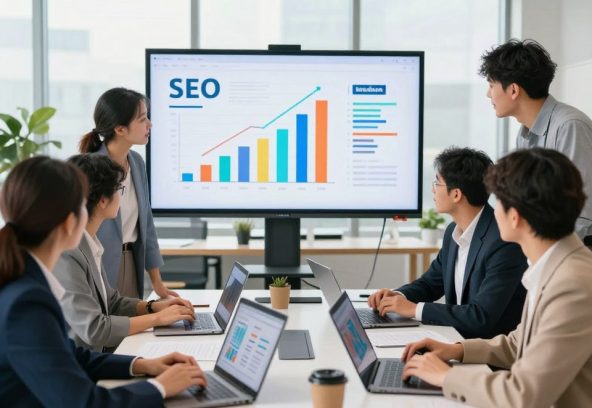



Did you know that over 90% of online experiences begin with a search engine? This staggering statistic highlights the importance of mastering effective strategies to increase your website’s visibility. In today’s digital landscape, high-quality content is essential for attracting visitors and keeping them engaged.
This comprehensive guide offers actionable techniques to help you refine your approach. You will discover how modern practices have evolved, ensuring your content remains relevant to both traditional search engines and AI tools. Our focus is on practical steps that any site owner can implement.
By following this guide, you will learn to align your content with user intent, satisfying the requirements of complex algorithms. Ultimately, this will enhance your digital presence and attract more qualified visitors. Emphasizing the creation of valuable content will not only serve your audience but also signal relevance to major search engine platforms.
Key Takeaways
- Master actionable strategies to boost your website’s visibility.
- Understand how modern practices impact content relevance.
- Learn to refine your content to meet user intent.
- Implement practical steps to improve engagement metrics.
- Create high-quality content that resonates with your audience.
Introduction to On Page SEO
Search engines are the starting point for most online journeys. Understanding how to optimize your web content is crucial for visibility. This practice, known as on-page optimization, involves refining various elements of your site. These include text, images, and videos to enhance your presence in search results.
For instance, the Semrush backlinks article illustrates this point. It improved its ranking from position 5 to 2 between September 2025 and February 2026 due to effective optimization. This change highlights how crucial on-page strategies are for achieving better visibility.
By focusing on internal modifications, you can help search engines better comprehend your content. This, in turn, allows them to match it with relevant user queries. Unlike off-page strategies, on-page optimization gives you complete control over your site’s performance.
Modern search engines and AI tools prioritize well-structured content. They favor pages that provide clear answers to user inquiries. Therefore, by optimizing your pages, you position your site to compete effectively in both traditional and AI-driven search environments.
| Element | Importance | Impact on Ranking |
|---|---|---|
| Text | Provides context and information | High |
| Images | Enhances engagement | Medium |
| Videos | Increases time on site | High |
Understanding the Basics of On Page SEO
A significant portion of online interactions begins with a search engine query. This highlights the necessity of understanding on-page optimization. This process focuses on refining elements within your site to enhance visibility and user engagement.
On-page SEO is one of the three main branches of digital marketing. It works alongside technical and off-page strategies to improve visibility. Even small adjustments can lead to significant improvements in rankings and traffic.
Refining your pages ensures that the words, phrases, and layout align with the search intent of your target customers. This creates a better user experience and can make your site appear more trustworthy.
By mastering the basics, you can effectively communicate what your site offers to both human readers and search engine crawlers. Consistent application of these techniques helps connect with local customers by surfacing your website in relevant search results.
Keyword Optimization and Strategic Placement
In the vast digital world, search engines are essential tools for users looking to find relevant content. To enhance your site’s visibility, effective keyword optimization is crucial. This process involves identifying phrases that resonate with your audience and integrating them seamlessly into your web pages.
Begin by incorporating your target keyword naturally within the first 100 words of your content. This placement signals to search engines what your page is about. However, it’s vital to avoid keyword stuffing, as this can harm your rankings.
- Utilize synonyms and variations to keep your text engaging and fluid.
- Modern search engines prioritize understanding user intent, so focus on topics rather than just repeating keywords.
- Clearly indicate your core topic in essential areas like your H1 header, URL, and subheaders.
By following these strategies, you will create content that is not only optimized for search engines but also valuable for your readers.

Crafting Effective Title Tags
The title of your page is often the first impression users have of your content. Crafting a compelling title is crucial for capturing the attention of search engine users. This can significantly influence user engagement and click-through rates.
Here are some best practices to consider:
- Keep it concise: Aim for titles under 70 characters to avoid truncation in search results.
- Make it compelling: Your title should match the search intent of your target audience, encouraging clicks.
- Use the ABC formula: Incorporate an adjective, a benefit, and a confidence booster to create enticing titles.
- Check for issues: Tools like Ahrefs Site Audit can help identify pages with title tag problems.
- Be aware of rewrites: Google rewrites title tags 61.6% of the time, so invest time in making your original title compelling.
Effective title tags not only attract users but also help AI understand and reference your brand in conversations, making them a critical factor in your overall strategy.

Optimizing Meta Descriptions for Click-Through
Crafting an effective meta description is essential for enticing users in search results. While they are not a direct ranking factor, these descriptions can significantly boost clicks and traffic. In fact, Google utilizes them for snippets about 37.22% of the time.
To maximize their impact, aim for concise meta descriptions, ideally around 160 characters. This ensures they fit well within search engine previews. Use this limited space to highlight key points and encourage searchers to choose your site over others.
Including your target keyword in the meta description is also beneficial. Google often bolds these terms in the results, which can enhance your click-through rate. Moreover, AI assistants like ChatGPT select sources based on the content’s URL, title, and snippet provided by the meta description.
For efficiency, consider using tools like Patches in Ahrefs Site Audit. This can help you batch-create meta descriptions for all your pages, saving time while maintaining quality.
Structuring Content with Clear Headings
A well-organized content layout helps guide readers through your material seamlessly. Utilizing clear headings is vital for both user experience and search visibility. Properly structured content not only enhances readability but also allows search engines to understand your pages better.
Here are some key practices to follow:
- Use HTML header tags: These help Google and AI assistants break your content into logical sections.
- Limit H1 tags: Each page should have one H1 tag for the main title, followed by H2 tags for main points and H3 tags for subtopics.
- Improve readability: Good subheadings allow users to skim and find information quickly.
- Include target keywords: Naturally incorporate them in headings to help AI extract clear answers.
- Utilize tools: Use the Ahrefs toolbar to check header tag hierarchy and consistency.
- Be descriptive: Use headings that provide context, like “How to Start Researching Keywords” instead of vague titles.

URL Optimization and Slug Best Practices
A search engine is typically the gateway for users seeking information online. Thus, crafting an effective URL structure is essential for both user experience and search visibility. A well-structured URL can help users and search engines understand the core topic of your pages.
Here are some best practices to consider:
- Keep it short: Aim for a concise URL structure that highlights the main topic, ideally three to five words.
- Incorporate keywords: Adding your target keyword to the URL slug builds reader confidence in the relevance of your page.
- Use hyphens: Separate words with hyphens, like “email-marketing-guide,” to enhance readability.
- Avoid unnecessary dates: Unless crucial, refrain from including publish dates in your URL to prevent misleading users.
- Consider breadcrumbs: Parts of the URL may appear in search results as breadcrumbs, aiding users in navigation.
Image Optimization: Alt Text and File Naming
Optimizing images can significantly impact your site’s overall performance. This involves using descriptive alt text and well-thought-out file names. Both elements are essential for enhancing accessibility and search visibility.
Descriptive Alt Text for Accessibility
Search engines rely on alt text descriptions to categorize imagery. They cannot view the images on your pages like human visitors can. Therefore, writing concise and descriptive alt text is crucial.
The main purpose of alt text is to improve accessibility for visitors using screen readers. However, it also helps search engines understand your content better. Keep your alt text to 125 characters or fewer, avoiding phrases like “image of” or “picture of.”
Optimized Image File Naming
Writing descriptive image file names, such as “ingredients-for-swedish-meatballs.jpg,” provides search engines with clues about the image’s subject matter. This practice not only aids in search visibility but also enhances user experience.
Compressing your images using tools like Squoosh or ShortPixel leads to faster load times. If you can produce original imagery rather than relying on stock photos, this can also improve your rankings in image searches.
Internal and External Linking Strategies
Users frequently turn to search engines to find the information they need online. To enhance your site’s visibility, implementing effective linking strategies is essential. Internal and external links play a significant role in how search engines and users navigate your content.
Harnessing the Power of Internal Links
Internal links help search engines and AI crawlers discover all the pages on your site. They also clarify how these pages relate to one another. Using relevant anchor text for these links is vital. It should feel natural and not forced, ensuring a smooth user experience.
Additionally, you can use Google’s site: search operator to quickly find relevant pages on your site to link to from your newly published content. This practice not only improves navigation but also enhances the overall structure of your site.
Linking to Credible External Sources
Linking to authoritative external sources is a proven tactic for boosting visibility and building trust. It signals to both readers and search engines that your content is well-researched. Furthermore, tools like Ahrefs’ Site Audit can help you identify and fix broken external links, preventing a negative user experience.
To maximize the impact of your links, consider using the hub-and-spoke model. This ensures that your most important “hub” pages receive the link authority they deserve from other pages on your site.
| Link Type | Purpose | Impact on Visibility |
|---|---|---|
| Internal Links | Connects related content | High |
| External Links | References credible sources | Medium |
| Broken Links | Negatively affects user experience | High |

Improving Page Speed and Technical On-Page SEO
Fast-loading websites are crucial for retaining visitors and improving rankings. The speed at which your site loads can significantly influence user experience. If a page takes too long to load, users may leave, leading to higher bounce rates and lower rankings.
Google evaluates page experience signals, including Core Web Vitals, security, and mobile-friendliness, when determining the ranking of your web pages. Keeping an “always-on” check of your Core Web Vitals in Ahrefs Site Audit can ensure your site remains fast and stable for users.
Enhancing Load Times with Optimized Images
Optimizing images is essential for faster load times. Compressed images not only improve speed but also enhance user experience. Additionally, technical factors like web hosting quality and server-side caching directly impact your page’s performance.
Addressing Technical Aspects for Better UX
Mobile-friendliness is critical because Google uses the mobile version of your pages for indexing and ranking. Avoid intrusive interstitials and dialogs, as these can frustrate users and negatively affect how search engines perceive your site’s usability.
| Factor | Impact on Speed | Importance |
|---|---|---|
| Image Optimization | Reduces load time | High |
| Web Hosting Quality | Affects server response | High |
| Mobile-Friendliness | Enhances accessibility | Critical |

Using Schema Markup to Enhance AI Visibility
For modern content creators, utilizing schema markup is key to improving search results. This type of structured data helps search engines and AI assistants understand the meaning and structure of your content. By implementing schema, you enhance your site’s visibility in search results.
Implementing Structured Data on Your Pages
Both Google and Microsoft confirm that structured data is vital for AI search. It aids in correctly interpreting your content. Here are some common schema types to consider:
- FAQPage: Ideal for Q&A sections.
- HowTo: Perfect for step-by-step instructions.
- Article: Shows author credibility and boosts trust.
You can use Google’s Structured Data Markup Helper to add schema to your pages. After implementation, the Rich Results Test will help verify your setup.
Leveraging Rich Snippets and Enhanced Search
Rich snippets display extra information in eligible search results. This makes your listings more appealing, encouraging users to click. By analyzing competitor pages cited in AI Overviews, you can optimize your content to compete for these valuable features.

Tracking and Measuring SEO Success
Tracking your site’s performance is crucial for understanding its success in the digital landscape. To effectively measure the impact of your optimization efforts, you should monitor key metrics over time.
Start by using Google Analytics 4 (GA4) to assess how many visitors come from search results. This tool allows you to track organic traffic growth, providing insights into user behavior.
Next, utilize tools like Semrush’s Position Tracking to monitor your target keywords’ rankings. This will help you see how your optimizations affect visibility in search results.
Additionally, keep an eye on your visibility in AI Overviews and featured snippets using the Semrush Organic Rankings tool. The AI Visibility Toolkit is also beneficial for tracking AI mentions of your content.
Remember, measuring success is a long-term process. Changes may take time to reflect, so it’s wise to routinely check your rankings.

Conclusion
To thrive in today’s competitive landscape, mastering content strategies is essential. By focusing on effective techniques, you can enhance your site’s visibility and drive organic traffic. Consistently applying these practices ensures your content remains relevant to both readers and search engines.
Remember, the journey of optimization is ongoing. Regularly review and update your content to maintain high rankings in search results. Concentrate on delivering high-quality, helpful content that aligns with user intent, while strategically placing your keywords to signal relevance.
Utilize the tools and best practices outlined in this guide to monitor your progress. This will empower you to make data-driven decisions for your site’s growth. With dedication to technical excellence and user experience, you can build a solid foundation for long-term visibility in search results.
For additional insights on boosting your online presence, explore unlocking free backlinks for your business.
FAQ
What is the importance of keyword optimization?
Keyword optimization is crucial as it helps search engines understand the content of your site. By selecting the right keywords, you can attract more relevant traffic, improving your site’s visibility and ranking.
How can I improve my title tags?
To enhance title tags, ensure they are concise, include your target keyword, and reflect the content accurately. A compelling title tag can significantly increase click-through rates from search results.
What role do meta descriptions play in SEO?
Meta descriptions provide a brief summary of your page content. Well-crafted descriptions can entice users to click on your link, thus improving your site’s traffic and search ranking.
Why is internal linking important?
Internal linking helps establish a hierarchy on your site, guiding users and search engines to important content. It can enhance user experience and improve the overall SEO of your site.
How do I optimize images for my website?
To optimize images, use descriptive alt text and ensure the file names are relevant. This not only improves accessibility but also aids in search engine indexing, potentially boosting your rankings.
What is schema markup and why should I use it?
Schema markup is a code that helps search engines understand your content better. Implementing it can enhance your visibility in search results through rich snippets, which can lead to higher click-through rates.
How can I track my SEO performance?
You can track SEO performance using analytics tools like Google Analytics and Search Console. Monitoring key metrics such as organic traffic, bounce rates, and conversion rates will help you gauge success and make necessary adjustments.