



Did you know that Meta doubled its monthly search traffic by implementing effective strategies across its entire organization? This impressive feat highlights the potential of optimized practices in the digital landscape. In a world where visibility is key, understanding how to leverage sophisticated techniques can make a significant difference for large-scale brands.
This guide delves into how your brand can align complex technical infrastructure with overarching business goals. By doing so, you can ensure a consistent online presence across thousands of pages. Grasping the unique challenges of large-scale optimization is essential for building a sustainable strategy that fosters long-term organic growth.
We will explore the essential tools and methodologies needed to manage extensive websites while maintaining high performance and user experience standards. With actionable insights, your team can navigate the ever-evolving landscape of search, helping you maintain a competitive edge in your market.
Key Takeaways
- Meta’s success demonstrates the power of effective strategies in boosting search traffic.
- Aligning technical infrastructure with business goals is crucial for visibility.
- Understanding unique challenges is key to sustainable growth.
- Essential tools are needed to manage large websites effectively.
- Actionable insights can help maintain a competitive edge.
What is Enterprise SEO?
Enterprise SEO is the organized approach to optimizing large websites, often containing millions of pages. This process aims to enhance visibility in search results and drive organic traffic. Unlike traditional methods, it requires meticulous coordination across an entire organization. This ensures that every page adheres to quality standards.
Meta is a notable example of success in this area. By applying advanced principles of enterprise SEO, they managed to double their monthly search traffic. The main goal of this approach is to align technical and content strategies with the broader objectives of the organization. This alignment helps in achieving measurable results in search performance.
Managing such a vast digital presence necessitates sophisticated tools. These tools can effectively handle the complexity of thousands of pages while maintaining a consistent brand message. By implementing scalable tactics, your team can ensure that the entire website remains optimized for both users and the ever-evolving algorithms of search engines.
| Key Elements | Description |
|---|---|
| Visibility | Enhancing search results for large websites. |
| Coordination | High-level orchestration across the organization. |
| Success Example | Meta’s traffic doubled through effective strategies. |
| Objectives | Aligning optimizations with business goals. |
| Tools | Utilizing sophisticated solutions for management. |
The Importance of Enterprise SEO in the Digital Landscape
As search engines evolve, organizations must adapt their strategies to stay relevant. In the first quarter of 2023, Google made 12 updates to its crawling and indexing processes. This rapid change forces large organizations to respond quickly to maintain visibility.
Enterprise SEO is essential because search engines are constantly changing. Many large-scale organizations struggle to keep up with these shifts. If these strategies are not prioritized, there is a risk of losing market visibility. Competitors may capture the attention of your target audience instead.
It is crucial for large organizations to integrate SEO into their workflows. This ensures that every new piece of content is optimized for modern search engines. As search behavior shifts, a robust program allows your brand to remain agile and responsive to trends.
By proactively managing your digital presence, you can avoid losing valuable traffic to competitors who are better prepared for search updates.

The Complexity of Large-Scale Technical Infrastructure
Large-scale websites face unique challenges due to their intricate technical frameworks. Managing these complexities is vital for effective optimization and user experience.
Integrating legacy systems with modern platforms can take months of planning. It is crucial to ensure that no functionality is lost during this transition. Many organizations struggle with this aspect, which can hinder their performance.
Automated tools are essential for managing the scale of these websites. Manual updates to millions of pages are simply not viable. By utilizing scalable automation, organizations can ensure that technical fixes are applied consistently across every web property.
Maintaining a stable and fast-loading website is fundamental for success. Even minor technical errors can impact millions of pages, making it critical to address JavaScript rendering issues and complex site architecture.
BrightEdge, for example, delivers 99.99% uptime by running reliable code on hardware that eliminates congestion and downtime. This reliability is key for any large organization aiming to enhance its online presence.

For more insights on optimizing large-scale websites, check out this comprehensive guide.
Data Management and Analytical Tools for Enterprise SEO
In the realm of digital marketing, managing vast amounts of data is crucial for achieving success. Organizations need sophisticated tools to handle the complexities of large-scale optimization.
BrightEdge Local exemplifies innovation by utilizing generative AI to automate review management. This tool minimizes manual work, allowing teams to focus on strategic tasks.
Tracking millions of keywords and analyzing user behavior data is essential. These efforts yield actionable insights that can shape long-term marketing strategies.
Moreover, competitive intelligence tools enable your team to monitor competitors’ pages. This helps identify content gaps where their strategies may outperform yours.
Advanced analytical platforms offer visualizations that facilitate data processing at scale. By integrating information from various sources, you gain a comprehensive view of your organic performance.
Ultimately, effective data management is the backbone of enterprise SEO. It empowers teams to uncover deeper insights, significantly reducing the time required to realize the value of their efforts.

For more insights on optimizing large-scale websites, check out this comprehensive guide.
Cross-Functional Collaboration Across Departments
Effective teamwork across marketing, development, and content teams can significantly enhance website optimization. Successful strategies rely on coordinated efforts where these teams work together to ensure the website meets search engine standards.
Establishing standing cross-functional teams allows your organization to achieve specific objectives. These teams involve representatives from social media, paid search, and analytics, ensuring a comprehensive approach.
When departments align on initiatives, they guarantee that all changes made to the website support the broader goals of the business. Strong project management and communication skills are vital to navigate the complex structures often found in large organizations.
By fostering a culture of collaboration, you can break down silos. This integration ensures that SEO is part of every step in the product development process. Effective cross-functional teams are better equipped to tackle the challenges of enterprise SEO, bringing diverse expertise to solve complex technical and content issues.

Building a Scalable SEO Strategy for Enterprise Brands
Creating a scalable strategy is essential for brands looking to enhance their online presence. A large retailer achieved an impressive 61% year-over-year growth in organic revenue for their Black Friday page by implementing a new workflow that focused on quality assurance and copywriting.
To develop a successful content strategy, your team must identify keyword opportunities that align with the customer journey and the specific goals of your brand. Conducting a thorough content audit is vital. This process organizes existing assets by topic categories, ensuring that every page meets high-quality signals for search engines.
Additionally, keyword research tactics should evolve. Incorporating People Also Ask questions and related searches helps capture user intent across different stages of the funnel. By prioritizing early optimization for tentpole landing pages, your organization can connect with consumers searching for promotions well before the event date.
A well-documented strategy ensures that all teams understand their roles in the content creation process. This clarity leads to faster production times and more competitive results.

Leveraging AI and Machine Learning in Enterprise SEO
The integration of artificial intelligence into digital marketing strategies is transforming how brands optimize their online presence. Tools like the BrightEdge Generative Parser monitor AI Overviews, Perplexity, and SearchGPT. This helps marketers tailor their strategies for the future of AI-powered search engines.
Artificial intelligence and machine learning are becoming integral to the market. They allow brands to scale their efforts based on continuously improving optimizations. Predictive analysis is another crucial aspect. It helps your team anticipate shifts in search behavior, ensuring that your content remains relevant even as new trends go viral.
By leveraging AI-powered insights, you can surface deeper data patterns that would be impossible to identify through manual analysis. These advanced tools reduce the manual work required to see value from SEO. This allows your team to focus on high-level strategy and creative execution.
As AI continues to reshape the search landscape, enterprise platforms must provide the technology necessary to win in both traditional SERPs and AI-generated answers.

Budgeting and Resource Allocation for Large-Scale SEO
A staggering 90% of large organizations believe that investing in search optimization is crucial for this year. This statistic underscores the need for dedicated budget and resource allocation.
Building a strong business case for search optimization is essential. It secures executive sponsorship and ensures that your program has the necessary support to drive growth.
Unlike smaller companies, enterprise teams must efficiently distribute resources across numerous priorities. This involves balancing immediate technical fixes with a long-term content strategy.
Aligning your optimization processes with the broader objectives of the organization helps leadership understand how search performance directly impacts the bottom line.
Effective resource allocation also means deciding how to prioritize different markets or product lines. This approach maximizes the return on your marketing investment.
By proving the value of your initiatives through data, you can justify the investment required to scale your efforts across the entire organization.

Optimizing Multiple Domains and International Websites
For global enterprises, managing numerous country-specific sites is essential. Each site often requires unique language adaptations and market-focused keywords. This complexity demands a well-coordinated approach to ensure consistent messaging across diverse regions.
To effectively manage multiple domains, a unified reporting strategy is vital. This allows you to monitor overall performance while also diving into the metrics of individual sites. With the right tools, your organization can streamline this process.
Platforms designed for large-scale operations can handle international websites seamlessly. This ensures that your optimization strategy remains coherent, regardless of language or cultural differences.
When dealing with various web properties, maintaining a centralized workflow is crucial. This keeps all teams aligned with the same global objectives, enhancing collaboration and efficiency.
Moreover, international SEO involves intricate hreflang implementations and localized content strategies. These practices ensure that users see the appropriate version of your site tailored to their market.
By utilizing a single dashboard to oversee your entire domain portfolio, you can pinpoint growth opportunities and resolve technical issues across all sites.
| Key Focus Areas | Description |
|---|---|
| Content Optimization | Tailoring content for 50+ country sites with specific language needs. |
| Unified Reporting | Holistic performance tracking across multiple domains. |
| Centralized Workflow | Ensuring team alignment on global objectives. |
| International SEO | Implementing hreflang and localized strategies. |
| Single Dashboard | Managing technical issues and growth opportunities. |

For more insights on optimizing large-scale websites, check out this trusted SEO company that can help your business succeed.
Workflow and Project Management Best Practices
A well-structured workflow can significantly enhance collaboration among diverse teams. In large organizations, effective project management is essential for optimizing SEO initiatives. By coordinating efforts, you can ensure that every team member contributes to the overall success of the project.
Tools such as JIRA and Trello help coordinate projects and ensure each team is represented for relevant tasks within the SEO workflow. Documented procedures, including RACI maps and SOPs, are vital for clarifying responsibilities when executing tasks.
Task Assignment and Milestone Tracking
- Clear workflow management prevents bottlenecks that often occur when multiple departments are involved in updating a large-scale website.
- By establishing a single management system, your organization gains visibility into all initiatives that impact the website, facilitating better collaboration across the board.
- Regular training sessions and onboarding programs ensure that new team members can quickly contribute to the success of the SEO program.
Effective Communication Strategies
- Effective communication strategies, such as hosting office hours or virtual coffee breaks, help build relationships between teams that do not work together frequently.

For more insights on boosting your search optimization efforts, check out this helpful resource.
Security and Risk Management in Enterprise SEO
Security measures are crucial for organizations managing extensive online platforms. Leading enterprise platforms maintain SOC 2 Type II and ISO 27001 certifications to ensure that your organization’s data remains private and secure at all times.
For large businesses, a single technical mistake on the website could affect millions of pages and result in significant revenue loss. Therefore, robust testing processes and thorough risk assessment protocols are necessary to ensure that any changes made to the site do not break critical functionality.
Risk management in enterprise SEO involves careful documentation of all procedures. This provides a reference point for future audits and troubleshooting. By implementing strict permission controls and user management, you can protect your digital assets from unauthorized access or accidental configuration errors.
Moreover, proactive monitoring of your website allows you to catch potential security threats or technical issues before they negatively impact your search rankings. For more insights on maintaining data privacy and security, check out this informative resource.

Monitoring, Reporting, and Proving ROI in Enterprise SEO
In the competitive world of digital marketing, monitoring and reporting are crucial for success. Effective tracking can lead to impressive results, with enterprise sites seeing up to 120% growth in traffic annually when using the right platforms. This growth highlights the importance of real-time insights and data-driven decision-making.
Leadership teams are more likely to fund initiatives that demonstrate clear connections between organic performance and actual business outcomes. This means your reporting must effectively link SEO results to conversions and revenue growth.
Real-time monitoring and automated alerts play a significant role in this process. They ensure that key stakeholders are notified immediately if there’s a drop in traffic or any technical issues arise. This proactive approach allows teams to address problems before they escalate.
Additionally, flexible reporting dashboards enable you to present insights that resonate with executives. By tracking performance against measurable goals, you can clearly demonstrate the ROI generated by your strategic optimization efforts.
| Key Focus Areas | Description |
|---|---|
| Traffic Growth | Enterprise sites can achieve up to 120% growth in traffic. |
| Revenue Connection | Linking organic performance to conversions and revenue. |
| Real-Time Alerts | Immediate notifications for traffic drops or issues. |
| Data-Driven Decisions | Proving the impact of SEO efforts for budget allocation. |
| Flexible Dashboards | Presenting insights that align with executive goals. |

How Enterprise SEO Differs from Traditional SEO
The scale of operations for large brands necessitates a specialized approach to online optimization. Unlike traditional methods, which often focus on smaller websites, enterprise SEO deals with thousands or millions of pages across multiple domains.
In an enterprise environment, one person cannot manage the entire strategy. This requires specialized teams to collaborate across the organization, ensuring every aspect of the website is optimized.
While traditional SEO might involve fixing a few broken links, enterprise SEO tackles complex challenges. These include JavaScript rendering and implementing international hreflang tags, which are crucial for global reach.
The stakes are significantly higher at this level. A single error on the website can cost the company a substantial amount of money. Thus, enterprise SEO demands a higher level of orchestration and project management.
Although the fundamental principles of optimization remain the same, the scale and complexity of enterprise-level work necessitate a completely different approach to execution.

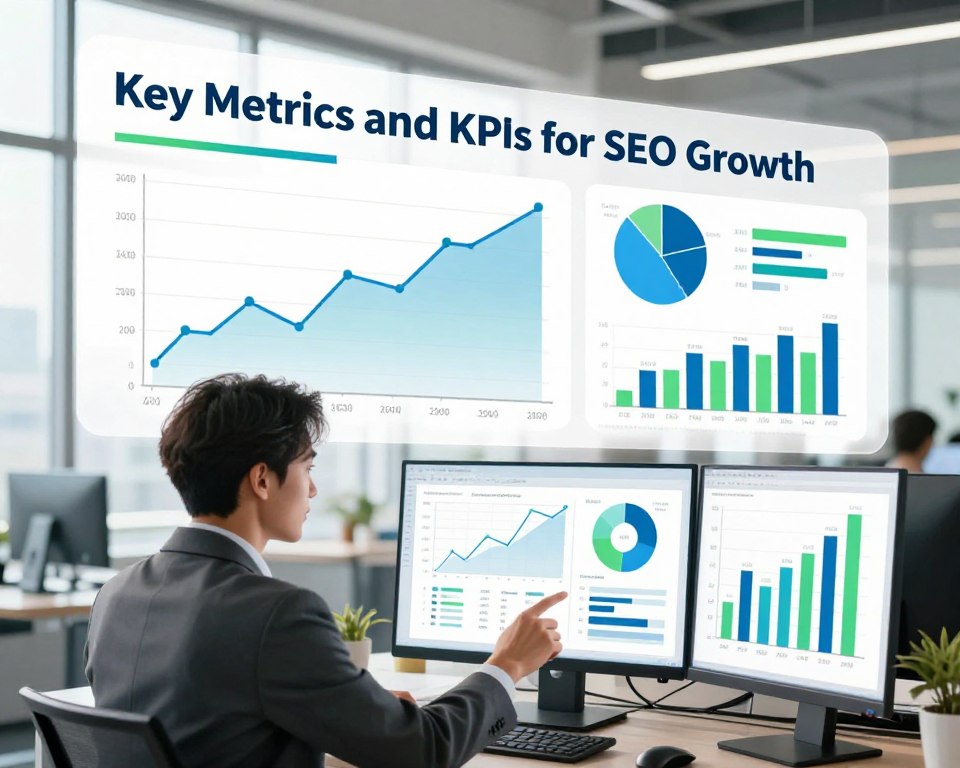
Key Metrics and KPIs for SEO Growth
Understanding the right metrics is essential for measuring the success of your digital strategies. Tracking performance indicators can lead to significant insights for your online initiatives. In the realm of enterprise strategies, focusing on the right metrics can yield substantial results.
For a Fortune 1000 company, a mere 0.1% improvement in conversions can translate to hundreds of thousands in revenue, making conversion tracking a vital KPI. Traffic analysis provides necessary data to understand how users interact with your site, helping identify areas for further optimization and growth.
Enterprise teams must focus on metrics that demonstrate the impact of their work on the bottom line. By aligning your KPIs with customer needs, you ensure that your strategies drive qualified leads likely to convert. Measuring success requires a combination of quantitative and qualitative data for a complete performance picture.
Consistent monitoring of these key metrics allows your team to adjust strategies in real-time, ensuring continued positive results.
| Key Metrics | Description |
|---|---|
| Conversion Tracking | A 0.1% improvement can lead to significant revenue gains. |
| Traffic Analysis | Data on user interactions helps identify optimization areas. |
| Impact Metrics | Focus on bottom-line results, not just rankings. |
| Customer Alignment | Ensure KPIs meet customer needs for better conversion. |
| Real-Time Monitoring | Adjust strategies based on consistent metric tracking. |
Future Trends and Innovations in Enterprise SEO
With the rise of AI technologies, businesses must adapt their optimization techniques to remain competitive. Today, enterprise SEO extends beyond traditional search engines to include Answer Engine Optimization for platforms like ChatGPT and Perplexity.
As the market continues to evolve, your content must show up everywhere your audience is looking, not just in traditional search engine results pages. Future innovations in this field will likely focus on deeper integration with AI, enabling more personalized and relevant search experiences for users.
Staying ahead of these changes requires a commitment to continuous learning and the adoption of new technologies that can handle the complexity of AI-powered search. By monitoring how your brand appears in AI-generated answers, you can identify new opportunities to capture market share and build authority in your industry.
The future of enterprise SEO lies in the ability to adapt to these rapid changes while maintaining a scalable and efficient process for your entire organization.

Conclusion
To thrive in today’s digital marketplace, brands must embrace a comprehensive approach to online visibility. Implementing a successful program requires a blend of advanced technology, teamwork, and a clear, data-driven strategy.
By breaking down silos and aligning your teams, your organization can harness the full potential of organic search to drive measurable business growth. While the scale of optimization can feel overwhelming, the right processes and tools will help you achieve consistent and impactful results.
Remember, this is an ongoing journey that demands constant adaptation to the ever-changing landscape of search engines. Your commitment to these practices will ensure that your brand remains visible and competitive in an increasingly digital-first market.
Start by auditing your internal processes and building a strong foundation that supports your long-term goals for organic performance and revenue.
FAQ
What is Enterprise SEO?
Enterprise SEO refers to the strategies and practices tailored for large organizations to improve their online visibility across multiple websites and platforms. It focuses on optimizing technical aspects, content, and user experience to drive traffic and enhance brand presence.
Why is Enterprise SEO important for my business?
It is crucial because it helps large brands manage their online presence effectively, ensuring that they remain competitive in the digital landscape. By implementing a robust strategy, businesses can increase visibility, attract more customers, and ultimately boost revenue.
What challenges do organizations face with large-scale SEO?
Organizations often encounter issues such as integrating legacy systems, managing vast amounts of data, and ensuring that all departments collaborate effectively. These complexities require specialized tools and strategies to overcome.
How can data management tools enhance my SEO efforts?
Utilizing advanced data management tools allows businesses to analyze trends, monitor performance, and make informed decisions. This helps in identifying opportunities for growth and improving overall SEO strategies.
What role does collaboration play in successful SEO?
Cross-functional collaboration is essential as it ensures that all departments, from marketing to IT, are aligned in their goals. This teamwork enhances the effectiveness of SEO strategies and leads to better results.
How can I build a scalable SEO strategy for my enterprise?
A scalable strategy involves comprehensive content planning, keyword research, and utilizing automation tools. This ensures that your SEO efforts can grow alongside your business without compromising quality.
What innovations are impacting Enterprise SEO?
Innovations such as AI and machine learning are transforming SEO by providing insights for optimization and predictive analysis. These technologies help businesses stay ahead of trends and improve their strategies.
How should I allocate resources for SEO in my organization?
Proper budgeting and resource allocation are vital for successful SEO. It’s important to assess the needs of your organization and allocate funds to the most impactful areas, such as tools, training, and personnel.
What are the best practices for managing multiple domains?
Best practices include establishing unified reporting systems and ensuring consistent branding across all domains. This helps in maintaining a cohesive online presence and improving overall SEO performance.
How can I measure the ROI of my SEO efforts?
Monitoring tools and real-time reporting are essential for tracking the effectiveness of your SEO strategies. Analyzing data allows you to make data-driven decisions and demonstrate the impact of your efforts on business growth.
What key metrics should I focus on for SEO growth?
Important metrics include traffic analysis, conversion rates, and keyword rankings. These indicators provide valuable insights into the effectiveness of your SEO strategies and areas for improvement.
How does Enterprise SEO differ from traditional SEO?
While traditional SEO often focuses on individual websites, Enterprise SEO encompasses a broader approach, addressing the complexities of multiple sites and large-scale operations. This requires specialized strategies and tools to achieve success.