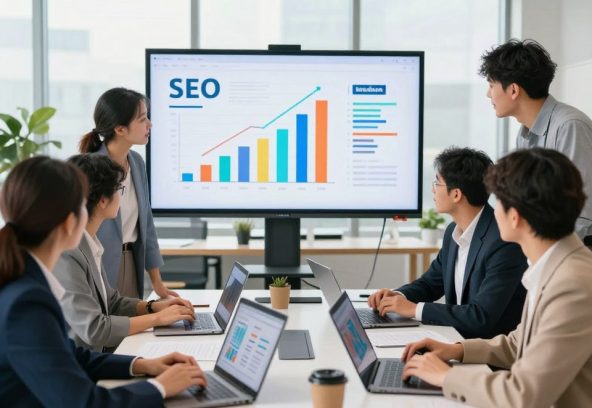



Did you know that organic click-through rates (CTR) have plummeted by a staggering 61% for queries featuring a Google AI Overview? This surprising statistic highlights a significant shift in how search engines operate. In this rapidly evolving digital landscape, mastering the art of citation is no longer optional; it’s essential for your brand’s visibility.
Between January and May 2025, sessions referred by AI skyrocketed by 527%. This surge indicates that when your brand is included in an AI Overview, your click-through rate can soar by 35% compared to traditional search results. Clearly, adapting to these changes can provide a competitive edge.
This guide will equip you with a comprehensive playbook tailored for Generative Engine Optimization. You’ll learn to navigate the complexities of modern search engines and implement a 7-step framework to ensure your content is discovered and cited effectively.
Key Takeaways
- Mastering citation is crucial for driving organic traffic.
- Traditional search strategies are becoming less effective.
- Being cited in AI Overviews significantly boosts your CTR.
- This guide offers a detailed playbook for modern search engines.
- Implementing a 7-step framework will enhance content discoverability.
Understanding the New Landscape of AI Citation Optimization
The landscape of content discovery is evolving rapidly, impacting how brands connect with users. In 2026, platforms like ChatGPT and Perplexity are projected to handle billions of queries monthly. This shift fundamentally changes the relationship between content and its visibility.
According to recent industry analysis, a striking 62% of users now initiate their search journey using AI tools rather than traditional search engines. This marks a dramatic change in user behavior.
In June 2025, AI platforms generated 1.13 billion referral visits, reflecting a 357% increase year-over-year for those who optimize their content effectively. Understanding this new landscape requires moving beyond traditional metrics. It’s essential to focus on how AI systems synthesize information to provide real value to users.
Additionally, citation patterns show a notable concentration. The top 20% of cited domains capture a staggering 80% of all AI references across the web. This highlights the importance of being among the most recognized sources.
| Year | Referral Visits (Billions) | Year-Over-Year Increase (%) |
|---|---|---|
| 2025 | 1.13 | 357% |
| 2026 (Projected) | 2.5 | 120% |
The Rise of AI Search and Its Impact on Brand Visibility
With the rise of AI in search, brand visibility has taken on a new dimension. Recent data shows that AI-referred sessions surged by an astonishing 527% between January and May 2025. This shift is crucial for brands aiming to stay relevant in today’s digital landscape.
Moreover, Google AI Overviews now appear in 50% of US searches, reaching a staggering 1.5 billion users monthly. This creates a new frontline for your digital marketing efforts.
When an AI Overview is displayed, only 8% of users click on traditional results, a drop from 15%. This emphasizes the need for brands to be included in these AI responses to maintain visibility.
Your brand’s presence is no longer just about ranking in the top ten blue links. It’s about becoming the primary source of truth for AI models. Adapting to these engines is essential, as most users now rely on AI-driven responses for their informational queries before visiting a website.

For more insights on how to navigate these changes, check out our FAQ section.
What is AI Citation Optimization?
In the digital age, the way we structure our content can significantly influence its visibility. AI citation optimization involves organizing your content so that generative models can easily extract and attribute information to your domain. This practice is essential for ensuring that your content stands out in a crowded digital landscape.
Unlike traditional SEO, which often focuses on keyword density and meta tags, this approach prioritizes machine comprehension. It emphasizes the semantic clarity of your digital content. By doing so, you enhance the chances of your content being featured in AI-generated responses.
To succeed, your content must directly address user queries. AI systems tend to favor passages that provide immediate, verifiable answers. This means that by focusing on citation, you teach AI engines to view your website as a trusted authority.
This strategic approach to content creation ensures that your brand remains relevant as AI systems continue to shape how users discover information online. 
How AI Search Engines Select and Cite Sources
The way search engines gather and reference information is transforming rapidly. Understanding this process is crucial for brands aiming to enhance their visibility. At the heart of this evolution is a method known as Retrieval-Augmented Generation (RAG).
RAG systems excel at pulling the most relevant external documents in real-time. They synthesize answers while effectively citing the sources they reference. This capability emphasizes the need for your content to be both clear and structured.
Understanding Retrieval-Augmented Generation
RAG systems prioritize semantic clarity, factual density, and structural organization. This means your content must be easily parsed to be considered for citation. The average large language model (LLM) cites only 2-7 domains per response. Therefore, your content needs to stand out significantly among countless competing pages.
Key Citation Factors: Clarity, Data, and Structure
- Factual density is essential. AI systems favor content with verifiable statistics and data points.
- Well-organized information with clear hierarchies is parsed more effectively than dense, unstructured text.
- To be cited, your content must provide immediate, relevant answers to user queries.
In summary, focusing on clarity, data, and structure will greatly enhance your chances of being cited by these advanced engines.
| Key Factors | Description |
|---|---|
| Semantic Clarity | Content should be easily understandable and relevant. |
| Factual Density | Incorporate verifiable statistics and research links. |
| Structural Organization | Use clear headings and hierarchies for better parsing. |
Platform-Specific Insights: ChatGPT, Perplexity, Google AI Overviews, and Claude
Understanding the specific behaviors of different platforms can significantly impact your citation strategy. Each platform has its own unique approach to how citations are handled and prioritized.
For instance, ChatGPT processes an estimated 1.6 billion search queries daily. Its citation behavior tends to favor high-authority, encyclopedic sources. This reflects a strong preference for established information in its training data.
On the other hand, Perplexity emphasizes recency and community-validated content. Notably, Reddit accounts for 46.5% of its citations, showcasing a clear inclination towards authentic, conversational material.
Claude utilizes Brave Search for web retrieval instead of Bing or Google. It heavily cross-verifies sources before citing them, especially for professional users. Each platform requires a unique strategy, as the relevance signals used by these engines differ significantly from traditional metrics.
To effectively reach your audience, tailor your content for these specific platforms. Remarkably, 90% of ChatGPT citations come from sources outside Google’s top 20 search results.
| Platform | Daily Queries | Citation Source Preference |
|---|---|---|
| ChatGPT | 1.6 billion | High-authority sources |
| Perplexity | N/A | Community-validated content (Reddit) |
| Claude | N/A | Cross-verified sources (Brave Search) |

The 7-Step GEO Optimization Framework to Boost Citations
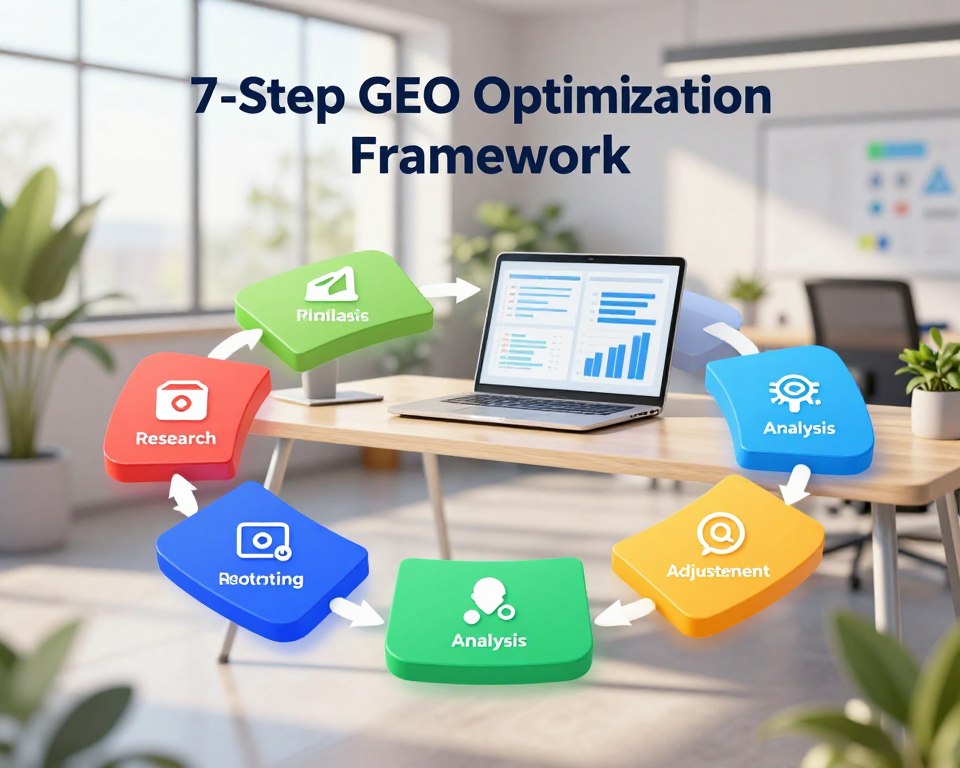
In today’s competitive digital landscape, having a robust strategy for enhancing your content’s visibility is vital. The 7-step GEO framework serves as a comprehensive roadmap, guiding you from an initial audit to effective citations. This method is designed to significantly increase your content’s mention rates, especially when compared to conventional strategies.
Research indicates that content tailored for enhanced visibility can achieve mention rates that are 3-4 times higher than standard SEO practices. Here’s a breakdown of the steps involved:
- Start with an audit of your current visibility to establish a baseline. You cannot improve what you do not measure.
- Address any technical barriers that may hinder your content from being recognized by search engines.
- Focus on building semantic authority, ensuring your content is structured for machine comprehension.
- Prioritize clarity and relevance in your content to attract more citations.
- Iterate on your strategy based on performance metrics and feedback.
By following this systematic approach, you ensure that your content is not only visible but also appealing to the algorithms that drive traffic. This structured method allows you to maximize your efforts and gain the citations your content deserves.
| Step | Description | Expected Outcome |
|---|---|---|
| 1 | Audit Current Visibility | Establish a baseline for improvement |
| 2 | Fix Technical Barriers | Enhance content accessibility |
| 3 | Build Semantic Authority | Increase relevance in search results |
Structuring Your Content for AI Extraction
The way you organize your content can greatly affect how easily it is extracted by search engines. Effective structuring is essential for ensuring that your content gets the visibility it deserves. This section will guide you through best practices for making your pages more extractable.
Using Clear Headings and Summaries
To enhance the extraction process, you must lead with the direct answer. Notably, 44.2% of all LLM citations come from the first 30% of text in your digital content. Each H2 and H3 heading should clearly signal the topic of that section, as AI systems use these to understand the context of your pages.
Creating Standalone Sections for Extractability
Structured data formats receive 3x more citations than paragraph-only content. Therefore, prioritize lists and clear hierarchies for better extraction. Each major section should be understandable without reading the rest of the piece, which is why you should add a brief summary at the start.
Avoid long walls of text without visual breaks, as these are difficult for AI systems to parse during the extraction and citation process.
| Key Practices | Description |
|---|---|
| Lead with Answers | Place direct answers in the first 30% of your content. |
| Use Clear Headings | Headings should clearly indicate the section topic. |
| Prioritize Structure | Lists and hierarchies enhance extractability. |

Optimizing for E-E-A-T and Semantic Authority
Building authority through content is essential for brands to stand out in today’s competitive online environment. A recent Princeton study confirmed that AI engines strongly favor earned, authoritative content over brand-owned material. This makes E-E-A-T signals more important than ever.
To demonstrate your expertise, include real examples, case studies, and first-hand observations. These elements prove your authority in your specific industry.
Establish expertise by adding bylines with professional titles and LinkedIn profiles near the top of each article. This helps AI algorithms assess reliability.
Furthermore, incorporate cited statistics and original research throughout your content. Generative Engine Optimization rewards specificity over vague claims.
Lastly, signal trustworthiness by keeping your content updated with accurate information. Display “last updated” dates to show ongoing maintenance of your digital assets.

Leveraging Schema Markup for Enhanced AI Visibility
Utilizing schema markup can significantly elevate your content’s visibility in search results. By implementing the right schema types, you can help search engines better understand your content, which increases the chances of being cited in AI-generated answers.
Schema markup acts as a roadmap for crawlers, clearly defining content boundaries. This clarity is crucial for improving your content’s discoverability. Here are some key schema types to consider:
Implementing FAQ, HowTo, and Article Schemas
- FAQPage schema: This is the highest-impact schema for enhancing visibility. AI systems favor FAQ-formatted content for response synthesis across all major platforms.
- Article schema: Use this for all editorial content, including author and datePublished properties. This helps AI systems classify your information correctly.
- HowTo schema: Ideal for instructional content, this schema clearly signals process-oriented information that AI systems frequently cite for user queries.
Moreover, pages with proper schema markup are 30-40% more likely to be cited in AI-generated answers. Always validate your schema using Google’s Rich Results Test before publishing. This ensures your technical implementation is error-free and ready for AI extraction.
| Schema Type | Impact | Purpose |
|---|---|---|
| FAQPage | Highest impact | Response synthesis |
| Article | Medium impact | Content classification |
| HowTo | High impact | Instructional clarity |

Building Third-Party Citations and External Validation Strategies
Establishing credibility through third-party validation is vital for brands in today’s digital marketplace. Utilizing external sources can significantly enhance your visibility and trustworthiness. Research shows that brands with multi-source validation see citation rates improve by 67% in AI overviews. This proves that leveraging third-party sources is essential for building credibility.
Among these sources, G2 stands out as the most cited software review platform across ChatGPT, Perplexity, and Google AI Overviews. Therefore, maintaining an active profile with recent reviews on G2 is crucial. Additionally, getting mentioned in reputable industry publications like TechCrunch or Search Engine Land provides the kind of third-party validation that AI engines weigh heavily.
Participating authentically in relevant subreddits can also yield citations from one of the most trusted sources in the AI citation ecosystem. Furthermore, encourage your partners and customers to reference your brand publicly. AI models learn associations from across the web to determine your overall trustworthiness.
| Strategy | Description | Impact |
|---|---|---|
| Multi-source Validation | Utilizing various third-party sources for citations. | Improves citation rates by 67% |
| G2 Profile | Maintain an active profile with recent reviews. | Increases visibility in AI searches |
| Industry Mentions | Get featured in top publications. | Enhances credibility and trust |

For more insights on how to build trust through external validation, check out our detailed guide.
Real-World Data and Case Studies in AI Citation Success
Real-world data is reshaping how brands assess their marketing effectiveness and the value of different traffic sources. Recent analysis shows that AI traffic converts at 14.2% compared to just 2.8% for Google organic. This indicates that an AI citation is worth roughly five times as much as a traditional click.
Furthermore, visitors from large language models (LLMs) convert 4.4 times better than those from organic search, according to Semrush’s analysis of over 260 billion rows of clickstream data from 2025. This data highlights the importance of adapting to new trends in content strategy.
To gain a competitive edge, it’s crucial to conduct a thorough analysis of competitor citation trends. Identify where they excel and where you have clear opportunities to improve. By comparing your performance against competitors, you can see which pages earn citations and why. This allows you to replicate their success in your content.
Utilize this real-world data to prioritize your efforts, focusing on high-intent queries that drive the most significant revenue for your business today.
| Metric | AI Traffic Conversion Rate | Google Organic Conversion Rate |
|---|---|---|
| Conversion Rate | 14.2% | 2.8% |
| LLM Visitor Conversion Rate | 4.4x better | N/A |

For more insights on improving your citations, check out our link-building strategies.
Advanced Tools and Techniques for AI Citation Tracking
To maintain a competitive edge, brands must leverage advanced tools for monitoring their presence across AI platforms. Advanced citation tracking is essential for measuring brand visibility, especially when manual checks become impractical across multiple AI engines.
Tools like HubSpot AEO are purpose-built for tracking and improving how a brand appears across major answer engines, including ChatGPT and Gemini. This specialized tool directly monitors AI responses to measure citation frequency, providing valuable insights into your brand’s performance.
Another innovative tool, Omnia, simulates real user behavior by opening actual browsers for ChatGPT. This ensures that the data reflects what users see in their specific markets, enhancing the accuracy of your tracking efforts.
Utilizing citation analysis helps identify which URLs win trust, why competitors dominate those citation slots, and which third-party domains to target. Remember, effective citation tracking requires a transparent methodology. Running the same prompt multiple times accounts for the inherent variability of AI models.

For more insights on the best tools for citation tracking, check out our detailed guide.
Integrating AI Citation Optimization with Traditional SEO Strategies
In the current digital climate, blending traditional SEO with new strategies is crucial for success. Traditional SEO metrics only tell half the story now. As search engines evolve, it’s vital to adapt.
Google AI Overviews frequently cite sources already ranking in the top 10 organic results. This means that traditional SEO tactics remain relevant alongside newer strategies. You must maintain your traditional SEO efforts while layering on AI-specific optimizations.
By aligning your traditional SEO with AI-ready content, you create a comprehensive strategy. This approach captures traffic from every possible search engine touchpoint today. It ensures your brand remains competitive as the line between traditional search and generative AI continues to blur for your users.

Conclusion
In an era where digital presence is paramount, brands must adapt to new strategies to stay relevant. Mastering the art of citation is essential for visibility and growth in today’s search landscape. By implementing the 7-step framework and focusing on structured, authoritative content, you can significantly enhance your chances of being cited by major engines.
Consistent monitoring through advanced tracking tools will keep you ahead of competitors and help you adapt to the rapidly evolving digital world. Your commitment to delivering high-quality, fact-dense content will ensure that you remain a trusted source for users and generative models alike.
Start your journey today by auditing your current visibility and taking the necessary steps to secure your place in the future of digital search.
FAQ
What is AI citation optimization?
AI citation optimization refers to the process of enhancing the visibility and authority of a brand through structured data and strategic mentions across various platforms. This approach helps improve search engine rankings and user engagement.
How can I improve my brand’s visibility using AI tools?
To boost your brand’s visibility, focus on creating high-quality content, utilizing schema markup, and ensuring your data is structured clearly. Engaging with third-party sources and leveraging tools for tracking can also significantly enhance your presence.
What role does schema markup play in citation strategies?
Schema markup is essential for enhancing AI visibility. It provides search engines with structured data about your content, which helps them understand and present your information more effectively, leading to better search results.
How do I track my citation success?
You can track citation success by using advanced tools that analyze your brand’s mentions, authority, and engagement metrics. Regular audits and adjustments based on data insights will also help maintain and improve your citation strategy.
What are the key factors for effective citations?
The key factors for effective citations include clarity of information, the accuracy of data presented, and the structure of your content. Ensuring these elements are optimized will improve your chances of being cited by AI search engines.
Can traditional SEO strategies be integrated with AI citation optimization?
Yes, integrating traditional SEO strategies with AI citation optimization can create a comprehensive approach. This includes focusing on keyword research, quality backlinks, and content relevance, which together enhance your overall online presence.